Wed
16
Sep
History of Knowledge
Readings, questions and assignments, week by week. Readings on Wednesdays and Fridays.
Nothing matches your search.
Week 1 14–20 September
Wed
16
Sep
Wed
16
Sep
Fri
18
Sep
Physics
In J. Barnes (ed.), The Complete Works of Aristotle, vol. 1 (Princeton University Press 1995): Book 1, pp. 315–317; Book 3, pp. 342–345; Book 8, pp. 418–427
Highlighted passages required, the rest optional.
Fri
18
Sep
1950 Aristotle
esse per se
esse per aliud
movetur per se
movetur per aliud
substance as matter and form
potential being and actual being
doctrine of the elements
natural and enforced motions
motor conjunctus
virtus movens
The Mechanization of the World Picture
Oxford University Press 1969 [1950], pp. 17–42 (“Aristotelianism”)
 Aristotle
Fri
18
Sep
The Essential Tension: Selected Studies in Scientific Tradition and Change
University of Chicago Press, pp. xi–xiii
Week 2 21–27 September
Wed
23
Sep
Selections: on Aristotle’s Physics, Boethius’ De trinitate, and the Summa Theologiae
The Collected Works of St. Thomas Aquinas (electronic edition, via Brightspace or WorldCat)
Skim: Commentary on Aristotle’s Physics, Book 1 (for a first impression); Commentary on Boethius’ De trinitate, Q. 2, art. 2 (“Can there be a science of divine realities?”); Summa Theologiae III, Q. 75, art. 4 (“Whether bread can be converted into the body of Christ?”).
 Boethius
Wed
23
Sep
The Foundations of Modern Science in the Middle Ages: Their Religious, Institutional, and Intellectual Contexts
Cambridge University Press, pp. 127–141
Wed
23
Sep
The Didascalicon: A Medieval Guide to the Arts
Transl. J. Taylor (Columbia University Press 1961), pp. 46–47, 90–97
Wed
23
Sep
Schools and Universities in Medieval Latin Science
In D.C. Lindberg & M.H. Shank (eds.), The Cambridge History of Science, vol. 2 (Cambridge University Press), pp. 207–239
Fri
25
Sep
Dialogue Concerning the Two Chief World Systems
University of California Press 1967 [1632], pp. 144–155, 162–167
Fri
25
Sep
 Galileo Galilei
 Week 3 28 September – 4 October
Wed
30
Sep
Assignment
Exam Part 1 (closed-book)
30% of the final grade. Covers all Part 1 readings, lectures and class discussions, including questions on a (possibly unseen) source text. Tests factual knowledge and interpretative skills.
Fri
2
Oct
2016 Hands-on history
From the Library to the Laboratory and Back Again: Experiment as a Tool for Historians of Science
Ambix 63, pp. 85–97
Workshop: reconstructing an ink recipe (Nieuw-Gildestein, zaal 3.87).
Week 4 5–11 October This week
Wed
7
Oct
Remaking Sixteenth-Century Botanical Woodblocks: Embodied Artisanal Knowledge in Early Modern Woodcutting
In S.A. Bendall & S. Dyer (eds.), Embodied Experiences of Making in Early Modern Europe (Amsterdam University Press), pp. 163–184
Choose 2 of the 4 readings for this session; the others are optional. In class: draw a plant and keep the drawing for Friday’s workshop.
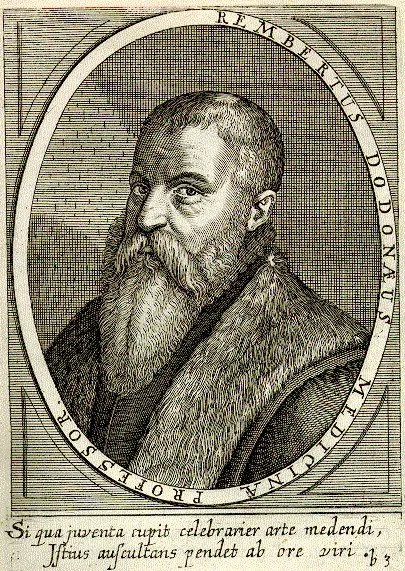 Rembert Dodoens
Wed
7
Oct
2019 Images & copying
The practice of copying in making knowledge in Early Modern Europe: an introduction
Word & Image 35, pp. 211–222
Choose 2 of the 4 readings for this session; the others are optional.
Wed
7
Oct
2012 Images & copying
Picturing the Book of Nature: Image, Text, and Argument in Sixteenth-Century Human Anatomy and Medical Botany
University of Chicago Press, pp. 101–123
Choose 2 of the 4 readings for this session; the others are optional.
 Leonhart Fuchs
  Andreas Vesalius
Wed
7
Oct
1995 Images & copying
Ad vivum, naer het leven, From the Life: Defining a Mode of Representation
Word & Image 11, pp. 353–372
Choose 2 of the 4 readings for this session; the others are optional.
Week 5 12–18 October
Tue
13
Oct
Assignment
Assignment 1: Report & reflection on the hands-on workshops
Deadline 23:59. 30% of the final grade. Instructions released on Friday 2 October (see Brightspace).
Wed
14
Oct
2009 Historiography
Science on the Move: Recent Trends in the History of Early Modern Science
Renaissance Quarterly 62, pp. 345–375
Introduction to the historiographical debates; can serve as the introductory article for Assignment 2.
Fri
16
Oct
2002 Print & manuscript
An Unacknowledged Revolution Revisited
American Historical Review 107, pp. 87–105
 Adrian Johns
Fri
16
Oct
1998 Print & manuscript
The Nature of the Book: Print and Knowledge in the Making
University of Chicago Press, pp. 1–6
Fri
16
Oct
 Elizabeth Eisenstein
 Week 6 19–25 October
Wed
21
Oct
2010 Print & manuscript
Too Much to Know: Managing Scholarly Information Before the Modern Age
Yale University Press, pp. 22–61
Wed
21
Oct
2019 Print & manuscript
Papering the Household: Paper, Recipes, and Everyday Technologies in Early Modern England
In C. Bittel, E. Leong & C. von Oertzen (eds.), Working with Paper: Gendered Practices in the History of Knowledge (University of Pittsburgh Press), pp. 32–45
Wed
21
Oct
2011 Print & manuscript
Marginalia, Commonplaces, and Correspondence: Scribal Exchange in Early Modern Science
Studies in History and Philosophy of Biological and Biomedical Sciences 42, pp. 193–202
Fri
23
Oct
2012 Global history
From West to East, from East to West? Early Science Between Civilizations
Early Science and Medicine 17, pp. 339–350
Fri
23
Oct
1969 Global history
Poverties and Triumphs of the Chinese Scientific Tradition
In The Grand Titration: Science and Society in East and West (Routledge 2005 [1969]), pp. 17–51
Fri
23
Oct
Week 7 26 October – 1 November
Wed
28
Oct
2019 Global history
The knowing world: a new global history of science
History of Science 57, pp. 373–399
Wed
28
Oct
2022 Global history
Translating the Inner Landscape: Anatomical Bricolage in Early Modern Japan
Osiris 37, pp. 163–191
Fri
30
Oct
1990 Humanism
Natural History and the Emblematic World View
In D.C. Lindberg & R.S. Westman (eds.), Reappraisals of the Scientific Revolution (Cambridge University Press), pp. 303–332
 Conrad Gessner
  Ulisse Aldrovandi
Fri
30
Oct
1991 Humanism
Defenders of the Text: The Traditions of Scholarship in an Age of Science, 1450–1800
Harvard University Press, pp. 178–203
Week 8 2–8 November
Wed
4
Nov
2025 Humanism
The Multiplicity of Scripture: The Making of the Antwerp Polyglot Bible
University of Toronto Press, pp. xvii–xxv, 1–30
 Christophe Plantin
  Benito Arias Montano
Wed
4
Nov
2013 Humanism
Philology and Empiricism: Observation and Description in the Correspondence of Joseph Scaliger (1540–1609)
In D. van Miert (ed.), Communicating Observations in Early Modern Letters (1500–1675) (London), pp. 89–114
 Joseph Scaliger
Fri
6
Nov
Video lecture on the Galileo forgery
Preparation for the visit to Special Collections (map room, University Library Science Park), where we handle Vesalius’ Fabrica, Galileo’s Sidereus Nuncius and Blaeu’s Atlas Maior.
 Joan Blaeu
Sun
8
Nov
Assignment
Assignment 2: Historiographical essay
Deadline 23:59. 40% of the final grade. Choose one debate (manuscript/print culture, global histories, or humanism in the history of science); use the readings from the final weeks plus one introductory article. Instructions released on Wednesday 14 October.
Further reading
-
, The Cheese and the Worms: The Cosmos of a Sixteenth-Century Miller 1976 Historiography Print & manuscript