← History of Knowledge · Timeline

Dramatis personae

Who’s who in the readings, in order of birth. Click someone for more.

Historical figures

Historians

Aristotle

384–322 BCE

Philosopher

His natural philosophy (Physics, De caelo) framed university learning from the 13th century to Galileo’s day.

Wrote

  • Aristotle, Physics (4th c. BCE) · Week 1

Boethius

c. 477–524

Roman philosopher and statesman

Aquinas’ commentary on his De trinitate asks whether there can be a science of divine things.

Hugh of St. Victor

c. 1096–1141

Canon and teacher at the Abbey of St Victor, Paris

His Didascalicon is a guide to reading and to the order of the arts.

Wrote

Thomas Aquinas

c. 1225–1274

Dominican theologian, master at Paris

Reconciled Aristotle with Christian theology in commentaries and the Summa Theologiae.

Étienne Tempier

d. 1279

Bishop of Paris

Issued the Condemnation of 1277.

On the timeline

Johannes Gutenberg

c. 1400–1468

Printer in Mainz

Printing with movable metal type; the Gutenberg Bible (c. 1455).

On the timeline

Nicolaus Copernicus

1473–1543

Astronomer and canon of Frombork

De revolutionibus orbium coelestium (1543).

Leonhart Fuchs

1501–1566

Physician and botanist in Tübingen

De historia stirpium (1542), the herbal whose woodcuts were drawn “from life”.

Andreas Vesalius

1514–1564

Anatomist, professor at Padua

De humani corporis fabrica (1543).

Conrad Gessner

1516–1565

Naturalist and bibliographer in Zürich

Historiae animalium (1551–1558) and the Bibliotheca universalis.

Appears in

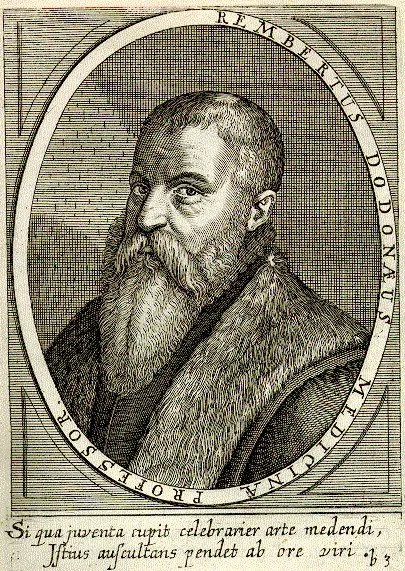
Rembert Dodoens

1517–1585

Physician and botanist from Mechelen

His Cruydeboeck (1554) reused many of Fuchs’ woodcuts; later court physician in Vienna and professor of medicine at Leiden.

Christophe Plantin

c. 1520–1589

Printer in Antwerp

Printed the Antwerp Polyglot Bible (1568–1572).

Appears in

On the timeline

Ulisse Aldrovandi

1522–1605

Naturalist in Bologna

Encyclopaedic natural histories and a famous collection.

Appears in

Benito Arias Montano

1527–1598

Spanish humanist and orientalist

Philip II’s general editor of the Antwerp Polyglot Bible.

Appears in

On the timeline

Menocchio (Domenico Scandella)

1532–1599

Miller from Montereale, Friuli

Tried twice by the Inquisition for his cosmology; the subject of Ginzburg’s The Cheese and the Worms.

Appears in

Joseph Scaliger

1540–1609

Philologist and chronologer, from 1593 in Leiden

Galileo Galilei

1564–1642

Mathematician and natural philosopher

Sidereus Nuncius (1610), Dialogue (1632), tried by the Inquisition in 1633.

Wrote

Appears in

On the timeline

Joan Blaeu

1596–1673

Cartographer and publisher in Amsterdam

Atlas Maior (1662–1665).

Appears in

On the timeline

E.J. Dijksterhuis

1892–1965

Dutch historian of science

The Mechanization of the World Picture (1950).

Wrote

Joseph Needham

1900–1995

Biochemist and historian of Chinese science

The “Needham question”: why did modern science arise in Europe and not in China?

Wrote

Thomas Kuhn

1922–1996

Historian and philosopher of science

Elizabeth Eisenstein

1923–2016

Historian of print

The Printing Press as an Agent of Change (1979); debated Adrian Johns in the AHR (2002).

Wrote

Appears in

Carlo Ginzburg

b. 1939

Italian historian, a founder of microhistory

Wrote

Anthony Grafton

b. 1950

Historian of humanist scholarship

Lorraine Daston

b. 1951

Historian of science

Wrote

Adrian Johns

Historian of print and the book

The Nature of the Book (1998); Eisenstein’s opponent in the print debate.

Wrote

Appears in